
Terracotta fragment of a column-krater (bowl for mixing wine and water)
Unknown Artist
460–440 BCE
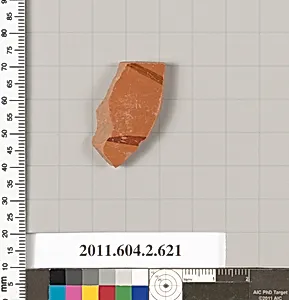
Medium
Terracotta
Classification
Vases
Culture & Period
Greek, Attic · Classical
Department
Greek and Roman Art
Museum
Metropolitan Museum of Art, New York, NY
Credit
Gift of Dietrich von Bothmer, Distinguished Research Curator, Greek and Roman Art, 2011
Accession Number
2011.604.2.621
Rights
Public Domain
Art Historical Context
This terracotta fragment from a column-krater, dating to 460–440 BCE, offers a glimpse into the refined world of Classical Attic Greece. A krater was a wide-mouthed mixing bowl essential for symposia—lively social gatherings where men diluted wine with water, fostering conversation, poetry, and philosophy. The distinctive column-like handles of this vase shape symbolized strength and elegance, making it a staple in elite households during Athens' Golden Age, amid the era's triumphs in democracy and the arts following the Persian Wars. Crafted in terracotta, the fired clay medium allowed Athenian potters and painters to showcase virtuoso techniques like red-figure decoration, where figures emerged in the natural clay color against a glossy black background. Though only a fragment survives, it exemplifies the precision and narrative flair of Attic vase-painting workshops, which exported these vessels across the Mediterranean, spreading Greek culture. Acquired as a gift from Dietrich von Bothmer, the Metropolitan Museum of Art's esteemed curator of Greek and Roman Art, this piece joins the museum's renowned collection of ancient vases. It invites us to imagine the vibrant scenes once adorning its surface—perhaps myths or daily life—bridging us to the ingenuity of artists whose anonymous hands shaped enduring symbols of ancient revelry.