
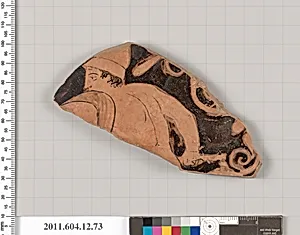
Terracotta fragment of a krater (deep bowl)?
Unknown Artist
mid-4th century BCE
Medium
Terracotta
Classification
Vases
Culture & Period
Greek, South Italian, Campanian · Classical
Department
Greek and Roman Art
Museum
Metropolitan Museum of Art, New York, NY
Credit
Gift of Dietrich von Bothmer, Distinguished Research Curator, Greek and Roman Art, 2011
Accession Number
2011.604.12.73
Rights
Public Domain
Art Historical Context
This terracotta fragment from a krater, or deep mixing bowl, hails from South Italian Campanian Greek culture in the mid-4th century BCE, during the period. Kraters like this one were essential vessels in ancient Greek symposia—lively social gatherings where wine was diluted with water for communal drinking. Produced in the vibrant workshops of Campania (modern-day southern Italy), these vases blended Greek artistic traditions with local Italic influences, showcasing the cultural exchanges of the Hellenistic world. Crafted from terracotta, the medium allowed for intricate painted decorations, often in red-figure technique, though this surviving fragment hints at the original's elaborate designs—perhaps mythological scenes or daily life motifs common in South Italian pottery. Its preservation offers a glimpse into the technical mastery of ancient potters, who fired clay at high temperatures for durability and then applied glossy slips for vivid colors. A generous gift to the Metropolitan Museum of Art in 2011 from Dietrich von Bothmer, a renowned curator of Greek and Roman art, this piece underscores the enduring allure of Classical ceramics. Though incomplete, it invites us to imagine the full krater's role in ritual and revelry, bridging millennia to our modern museum experience.