
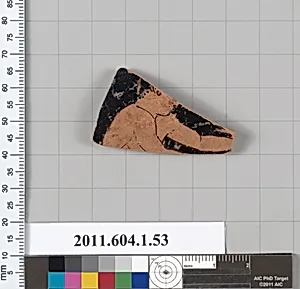
Terracotta fragment of a kylix (drinking cup)
Unknown Artist
460–450 BCE
Medium
Terracotta
Classification
Vases
Culture & Period
Greek, Attic · Classical
Department
Greek and Roman Art
Museum
Metropolitan Museum of Art, New York, NY
Credit
Gift of Dietrich von Bothmer, Distinguished Research Curator, Greek and Roman Art, 2011
Accession Number
2011.604.1.53
Rights
Public Domain
Art Historical Context
This delicate terracotta fragment from a kylix, or shallow drinking cup, hails Attic Greece during the Classical period (460–450 BCE), a age of Athenian artistry following the Persian Wars. Produced in the workshops of ancient Athens, such vessels were essential for symposia—lively social gatherings where elite men reclined, drank wine, and debated philosophy. Though only a fragment survives, it exemplifies the precision of Attic potters, who wheel-threw clay bodies and fired them to a warm red hue, often adorning them with intricate black-figure or red-figure paintings depicting myths, athletes, or daily life. Kylikes like this one were not mere utensils but cultural treasures, bridging utility and aesthetics in everyday rituals. Their wide, stemmed design allowed for easy handling while showcasing elaborate scenes on the interior "tondo" and exterior. This piece, gifted to the Metropolitan Museum of Art in 2011 by esteemed curator Dietrich von Bothmer, highlights the enduring allure of Greek vase-painting—a medium that preserved narratives for posterity without the perishability of other arts. Though incomplete, the fragment invites us to imagine its full vibrancy, reminding visitors of Classical Greece's mastery in blending form, function, and storytelling on humble terracotta.