
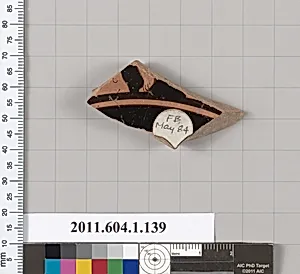
Terracotta fragment of a kylix (drinking cup)
Unknown Artist
second quarter of the 5th century BCE
Medium
Terracotta
Classification
Vases
Culture & Period
Greek, Attic · Classical
Department
Greek and Roman Art
Museum
Metropolitan Museum of Art, New York, NY
Credit
Gift of Dietrich von Bothmer, Distinguished Research Curator, Greek and Roman Art, 2011
Accession Number
2011.604.1.139
Rights
Public Domain
Art Historical Context
This terracotta fragment from a kylix, or shallow drinking cup, hails from Attic Greece in the second quarter of the 5th century BCE, during the height of the Classical period. Produced in Athens, the epicenter of Greek artistic innovation, such kylikes were essential for symposia—lively social gatherings where elite men reclined, drank wine, and discussed philosophy, politics, and poetry. Though only a fragment survives, it exemplifies the everyday elegance of Attic pottery, crafted from fired clay and often adorned with intricate scenes from mythology or daily life. Attic vases like this one represent a pinnacle of ancient ceramic artistry, transitioning from earlier black-figure techniques to the more refined red-figure style that emerged around 530 BCE. This method allowed painters greater freedom to depict anatomy, movement, and emotion with remarkable naturalism, influencing later Western art. Even as a modest shard, it offers a tangible link to Periclean Athens, the era of the Parthenon and democratic flourishing post-Persian Wars. Generously gifted to the Metropolitan Museum of Art in 2011 by Dietrich von Bothmer, a renowned curator of Greek and Roman art, this piece underscores the enduring value of fragments in piecing together ancient narratives. Visitors can appreciate how such artifacts illuminate the rituals and aesthetics of a civilization that shaped our world.