
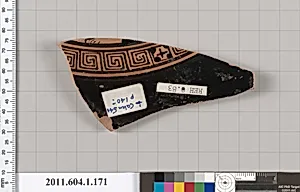
Terracotta fragment of a kylix (drinking cup)
Unknown Artist
470–450 BCE
Medium
Terracotta
Classification
Vases
Culture & Period
Greek, Attic · Classical
Department
Greek and Roman Art
Museum
Metropolitan Museum of Art, New York, NY
Credit
Gift of Dietrich von Bothmer, Distinguished Research Curator, Greek and Roman Art, 2011
Accession Number
2011.604.1.171
Rights
Public Domain
Art Historical Context
This terracotta fragment from a kylix, or shallow drinking cup, dates to the Classical Greek period (470–450 BCE) and hails from Attic workshops in Athens, the epicenter of ancient Greek pottery production. Kylixes like this one were essential for symposia—lively social gatherings where elite men reclined, drank wine, and debated philosophy or recited poetry. Though only a fragment survives, it offers a glimpse into the refined craftsmanship of Attic vase-painters, who fired clay at high temperatures to create durable, vividly painted vessels exported across the Mediterranean. Attic pottery from this era marked a pinnacle of artistic innovation, transitioning from earlier black-figure techniques to the more naturalistic red-figure style, where figures were outlined in black slip against the clay's natural red hue. Details like this fragment highlight the era's mastery of form and decoration, often featuring mythological scenes, athletes, or daily life that reflected Athenian ideals of beauty, symmetry, and humanism. Its survival underscores the fragility of ancient artifacts, preserved through careful excavation and connoisseurship. Generously gifted to the Metropolitan Museum of Art in 2011 by Dietrich von Bothmer, this piece enriches our understanding of Classical Greece's cultural vibrancy. Stand close and imagine it whole, brimming with diluted wine under flickering lamplight!