
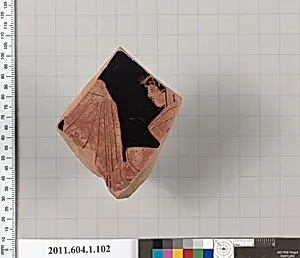
Terracotta fragment of a kylix (drinking cup)
470–450 BCE
Medium
Terracotta
Classification
Vases
Culture & Period
Greek, Attic · Classical
Department
Greek and Roman Art
Museum
Metropolitan Museum of Art, New York, NY
Credit
Gift of Dietrich von Bothmer, Distinguished Research Curator, Greek and Roman Art, 2011
Accession Number
2011.604.1.102
Rights
Public Domain
Art Historical Context
This delicate terracotta fragment from a kylix, or shallow drinking cup, dates to Classical Greek period (470–450 BCE) and hails from Attic workshops in Athens. Attributed tentatively to the Schnopt Painter, a of red-figure pottery, it exemplifies the refined craftsmanship of ancient Greek vase-painters. The kylix's broad, low profile with handles made it ideal for the symposion, an all-male social gathering where wine was mixed with water and savored amid philosophical discourse and entertainment. Red-figure technique, dominant in Attic pottery by this era, allowed artists to reserve the clay's natural red color for figures while painting details in glossy black slip—a reversal of earlier black-figure styles that enhanced anatomical precision and narrative depth. Though only a fragment survives, it reflects the era's artistic zenith, when Athenian vases were prized exports symbolizing cultural prestige across the Mediterranean. Gifted to the Metropolitan Museum of Art in 2011 by curator Dietrich von Bothmer, this piece offers a tangible link to everyday elite life in democratic Athens, where such vessels blended utility, artistry, and ritual. Imagine it once brimming with diluted wine, sparking lively debates under lamplight!