
Terracotta fragment of a kylix (drinking cup)
second quarter of the 5th century BCE
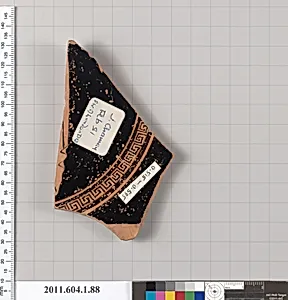
Medium
Terracotta
Classification
Vases
Culture & Period
Greek, Attic · Classical
Department
Greek and Roman Art
Museum
Metropolitan Museum of Art, New York, NY
Credit
Gift of Dietrich von Bothmer, Distinguished Research Curator, Greek and Roman Art, 2011
Accession Number
2011.604.1.88
Rights
Public Domain
Art Historical Context
This terracotta fragment from a kylix, or shallow drinking cup, hails from Attic Greece in the second quarter of the 5th century BCE, during the early Classical period. Crafted around 480–470 BCE, it exemplifies the refined pottery produced in Athens at a time when the city was emerging as a cultural powerhouse following the Persian Wars. Kylikes like this were essential for symposia—ively social gatherings where elite men reclined, drank wine mixed with water, and engaged in philosophical discourse, poetry, and revelry. Attributed to the Painter of London D 12, an anonymous master named after a vase in the British Museum, the fragment showcases red-figure technique, a revolutionary method perfected in Athens around 530 BCE. Here, figures were outlined in black slip, leaving the natural red clay to reveal intricate details painted with diluted slip for shading and highlights. This innovation allowed for greater anatomical precision and narrative depth compared to earlier black-figure styles, reflecting the era's advances in naturalism and humanism. Though only a fragment survives—generously gifted to the Metropolitan Museum of Art in 2011 by curator Dietrich von Bothmer—it offers a tantalizing glimpse into everyday luxury and artistic virtuosity. Such vessels bridged art and ritual, often depicting myths or athletic scenes that mirrored the Greek ideal of kalokagathia, harmonizing beauty and goodness. A humble shard, yet a window to antiquity's vibrant symposia!
About the Artist
Painter of London D 12
### Painter of London D 12 The Painter of London D 12 was an anonymous ancient Greek vase painter active in Attica during the late Archaic period, around 520–500 BCE. Named by the pioneering scholar Sir John Beazley after a specific black-figure hydria (water jar) in the British Museum's collection (inventory number D 12), this artist exemplifies the anonymous masters of Attic pottery workshops. ...