
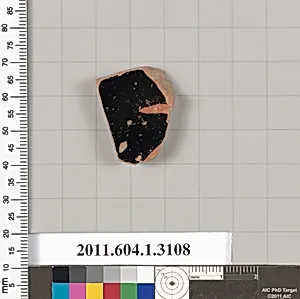
Terracotta fragment of a kylix (drinking cup)
Unknown Artist
first half of the 5th century BCE
Medium
Terracotta
Classification
Vases
Culture & Period
Greek, Attic · Archaic/Classical
Department
Greek and Roman Art
Museum
Metropolitan Museum of Art, New York, NY
Credit
Gift of Dietrich von Bothmer, Distinguished Research Curator, Greek and Roman Art, 2011
Accession Number
2011.604.1.3108
Rights
Public Domain
Art Historical Context
This terracotta fragment from a kylix, or shallow drinking cup, hails from Attic Greece in the first half of the 5th century BCE, bridging theic and Classical periods.ed by an unknown artist, it exemplifies the exquisite pottery tradition of ancient Athens, where everyday vessels doubled as canvases for artistic expression. Kylikes like this were essential for symposia—lively social gatherings of men sharing wine, philosophy, and poetry—often featuring intricate decorations in the revolutionary red-figure technique that emerged around this time, allowing figures to stand out vividly against a glossy black background. Though only a fragment survives, it offers a tantalizing glimpse into the technical mastery of Attic potters, who fired terracotta at high temperatures for durability and sheen. These vases were not mere utensils but cultural artifacts, exported across the Mediterranean and reflecting Greece's artistic zenith amid the Persian Wars. Today, housed in the Metropolitan Museum of Art's Greek and Roman Art Department, this piece was generously gifted in 2011 by Dietrich von Bothmer, a legendary curator whose passion enriched our understanding of antiquity. Such fragments remind us how even shards preserve history, inviting us to imagine the symposiast's hand lifting the full cup in celebration.