
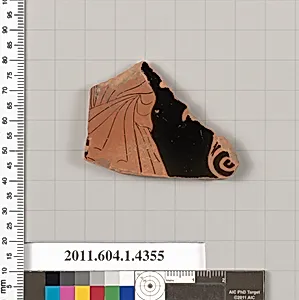
Terracotta fragment of a kylix (drinking cup)
Unknown Artist
second quarter of the 5th century BCE
Medium
Terracotta
Classification
Vases
Culture & Period
Greek, Attic · Classical
Department
Greek and Roman Art
Museum
Metropolitan Museum of Art, New York, NY
Credit
Gift of Dietrich von Bothmer, Distinguished Research Curator, Greek and Roman Art, 2011
Accession Number
2011.604.1.4355
Rights
Public Domain
Art Historical Context
This terracotta fragment from a kylix, or shallow drinking cup, hails from Attic Greece in the second quarter of 5th century BCE, during the height of the Classical period. in Athens, the epic of ancient Greek pottery, such vessels were essential for symposia—lively social gatherings where elite men reclined, drank wine mixed with water, and engaged in philosophical discourse, poetry, and games. Though only a fragment survives, it exemplifies the exquisite craftsmanship of Attic workshops, where potters and painters collaborated to create functional yet artistically ambitious ceramics. Kylixes were prized for their wide, low profile, allowing drinkers to hold them gracefully while reclining, often featuring intricate scenes on the interior tondo (central medallion) visible only when emptied. Attic terracotta vases from this era represent a pinnacle of Greek art, transitioning from black-figure to red-figure techniques that highlighted anatomical precision and narrative storytelling, influencing later Western ceramics and painting. Generously gifted to the Metropolitan Museum of Art in 2011 by Dietrich von Bothmer, a leading scholar of Greek and Roman art, this piece invites us to ponder the daily rituals of ancient Athenians amid their golden age of democracy and cultural flourishing. Even in its incomplete state, it whispers of sympotic revelry and enduring human conviviality.