
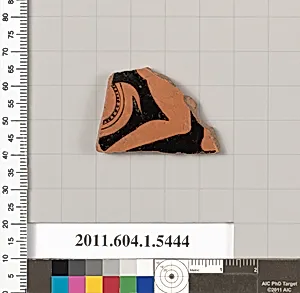
Terracotta fragment of a kylix (drinking cup)
Unknown Artist
500–490 BCE
Medium
Terracotta
Classification
Vases
Culture & Period
Greek, Attic · Archaic
Department
Greek and Roman Art
Museum
Metropolitan Museum of Art, New York, NY
Credit
Gift of Dietrich von Bothmer, Distinguished Research Curator, Greek and Roman Art, 2011
Accession Number
2011.604.1.5444
Rights
Public Domain
Art Historical Context
This delicate terracotta fragment from a kylix, or shallow drinking cup, hails from Attic Greece around 500–490 BCE, during the waning years of the Archaic period Crafted by an unknown artist, it exemplifies the exquisite pottery tradition of ancient Athens, where such vessels were essential for symposia—lively social gatherings of men discussing philosophy, poetry, and politics over wine. Though only a fragment survives, it invites us to imagine the full cup's graceful form, designed for easy handling while reclining. Attic vases like this one were not mere utilitarian objects but canvases for storytelling, often adorned with black-figure or emerging red-figure techniques that highlighted mythological scenes or daily life. Terracotta's durability made it ideal for export across the Mediterranean, spreading Greek culture far and wide. Dating to a pivotal moment just before the Classical era, this piece reflects the refined aesthetics of late Archaic art, bridging rigid early forms with the fluid naturalism to come. Generously donated to the Metropolitan Museum of Art in 2011 by Dietrich von Bothmer, a pioneering curator of Greek and Roman art, this fragment offers a tangible link to Athens' golden age. Pause here and ponder: what tales might it have witnessed at a symposium under starlit skies?