
Terracotta fragment of a kylix (drinking cup)
490–480 BCE
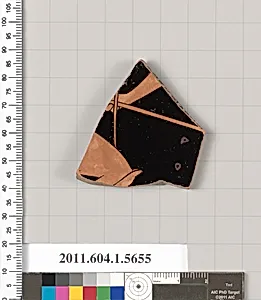
Medium
Terracotta
Classification
Vases
Culture & Period
Greek, Attic · Late Archaic
Department
Greek and Roman Art
Museum
Metropolitan Museum of Art, New York, NY
Credit
Gift of Dietrich von Bothmer, Distinguished Research Curator, Greek and Roman Art, 2011
Accession Number
2011.604.1.5655
Rights
Public Domain
Art Historical Context
Behold this exquisite terracotta fragment from a kylix, or drinking cup, crafted by the renowned Attic vase-painter Onesimos around 490–480 BCE. Housed in the Metropolitan Museum of Art's Greek and Roman Art Department, this piece—graciously gifted by distinguished curator Dietrich von Bothmer in 2011—offers a tantalizing glimpse into Late Archaic Greek artistry. Kylikes like this were essential to symposia, the lively social gatherings where elite men reclined, drank wine, and debated philosophy or reveled in poetry. Onesimos, a master of the red-figure technique, revolutionized vase painting by reserving the natural red clay for figures while painting intricate details in black slip and added accents of white and purple. This method allowed for greater anatomical precision and dynamic poses, marking a shift from the earlier black-figure style toward the fluid grace of Classical art. Though only a fragment survives, it embodies the period's cultural vibrancy, likely adorned with mythological scenes or athletic youths that celebrated Athenian ideals of beauty, heroism, and intellect. In the Late Archaic era, as Athens rose to prominence before the Persian Wars, such vases were both everyday luxuries and export treasures, spreading Greek influence across the Mediterranean. This shard invites us to ponder the hands that shaped it millennia ago, bridging ancient revelry with our modern gaze.
About the Artist
Onesimos
**Onesimos** was an ancient Athenian vase painter who flourished in Athens around 500–480 BC. Specializing in the red-figure technique during the Early Classical period, he focused primarily on decorating drinking cups, most often of Type B. Over two hundred vessels have been attributed to him, reflecting his prolific output and high demand in the Attic pottery workshops.) His training appears cl...