
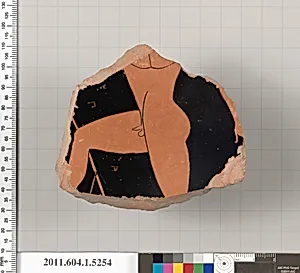
Terracotta fragment of a kylix (drinking cup)
510–500 BCE
Medium
Terracotta
Classification
Vases
Culture & Period
Greek, Attic · Archaic
Department
Greek and Roman Art
Museum
Metropolitan Museum of Art, New York, NY
Credit
Gift of Dietrich von Bothmer, Distinguished Research Curator, Greek and Roman Art, 2011
Accession Number
2011.604.1.5254
Rights
Public Domain
Art Historical Context
This terracotta fragment of a kylix, or drinking cup, dates to the final years of the Archaic period in Athens, around 510–500 BCE. Created by the Poseidon Painter, it belongs to a time when Attic potters were mastering sophisticated techniques to depict figures with greater naturalism and detail. Kylixes were essential vessels in Greek symposia—lively social gatherings where wine, conversation, and cultural exchange flourished—making even small surviving pieces valuable windows into daily life and artistic innovation. The Poseidon Painter’s work reflects the refined style of late Archaic vase painting, where artists balanced elegant forms with narrative scenes drawn from mythology or athletics. Though only a fragment remains, its terracotta medium highlights the durability and widespread use of clay in Greek art, allowing these objects to survive for millennia. Such pieces were both functional and decorative, often featuring interior tondi visible when the cup was raised to drink. Housed in the Metropolitan Museum’s Greek and Roman Art collection, this fragment underscores the importance of Attic pottery in understanding ancient Greek culture. It connects modern viewers to the artistic traditions that influenced later Western art, reminding us how everyday objects carried profound cultural and aesthetic significance.