
Terracotta fragment of a kylix (drinking cup)
Unknown Artist
520–500 BCE
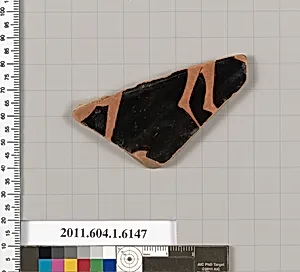
Medium
Terracotta
Classification
Vases
Culture & Period
Greek, Attic · Archaic
Department
Greek and Roman Art
Museum
Metropolitan Museum of Art, New York, NY
Credit
Gift of Dietrich von Bothmer, Distinguished Research Curator, Greek and Roman Art, 2011
Accession Number
2011.604.1.6147
Rights
Public Domain
Art Historical Context
This terracotta fragment from a kylix, a shallow drinking cup popular in ancient Greece, dates to the late Archaic period (520–500 BCE) hails from Attic workshops in Athens. Kylikes like this were essential for symposia—ively social gatherings where elite men reclined, drank wine mixed with water, and engaged in intellectual discourse, poetry, and entertainment. Though only a fragment survives, it exemplifies the refined pottery production that made Attic vases a cornerstone of Greek art, often exported across the Mediterranean. Crafted from terracotta, the medium allowed for intricate painted decorations using techniques like black-figure or the emerging red-figure style, where figures were outlined in black slip and details incised or reserved in the natural clay color. This piece reflects the Archaic era's shift toward more naturalistic forms and dynamic compositions, bridging the rigid geometry of earlier Greek art with the humanism of the Classical age. Its cultural significance lies in capturing everyday luxury: these vessels weren't just functional but status symbols, adorned with myths, athletes, or revelers that entertained and educated users. Generously gifted to the Metropolitan Museum of Art in 2011 by Dietrich von Bothmer, this fragment invites us to imagine the full kylix in action, evoking the vibrancy of ancient Athenian life. (198 words)