
Terracotta fragment of a kylix (drinking cup)
490–470 BCE
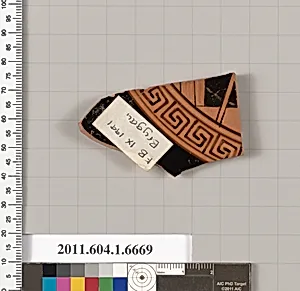
Medium
Terracotta
Classification
Vases
Culture & Period
Greek, Attic · Late Archaic/Early Classical
Department
Greek and Roman Art
Museum
Metropolitan Museum of Art, New York, NY
Credit
Gift of Dietrich von Bothmer, Distinguished Research Curator, Greek and Roman Art, 2011
Accession Number
2011.604.1.6669
Rights
Public Domain
Art Historical Context
This exquisite terracotta fragment from a kylix, or shallow drinking cup, crafted by Attic Greek artist Brygan around 490–470 BCE, a glimpse into the Late Archaic to Early Classical transition in ancient pottery. Attic vases like this were central to symposia—lively social gatherings where elite men reclined, drank wine, and discussed philosophy or poetry. Brygan, associated with the innovative red-figure technique that emerged in Athens around 530 BCE, likely adorned this piece with detailed figures painted in the natural red clay, reserving the black-gloss background for dramatic contrast. The kylix's wide, shallow bowl was designed for easy handling while reclining, embodying the refined aesthetics of Athenian daily life and elite culture. This period marked a shift from the rigid Archaic style toward the more naturalistic forms of Classical art, with potters and painters experimenting with perspective and anatomy. Though only a fragment survives, it exemplifies the technical mastery of Attic workshops, where firing processes created glossy blacks and vibrant reds enduring for millennia. Generously donated to the Metropolitan Museum of Art in 2011 by Dietrich von Bothmer, this piece invites us to imagine the full vessel's vibrant scenes—perhaps revelers, myths, or athletes—preserving a slice of ancient Greece's vibrant world.