
Terracotta fragment of a kylix (drinking cup)
500–480 BCE
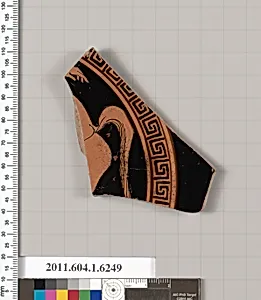
Medium
Terracotta
Classification
Vases
Culture & Period
Greek, Attic · Archaic
Department
Greek and Roman Art
Museum
Metropolitan Museum of Art, New York, NY
Credit
Gift of Dietrich von Bothmer, Distinguished Research Curator, Greek and Roman Art, 2011
Accession Number
2011.604.1.6249
Rights
Public Domain
Art Historical Context
This terracotta fragment of a kylix, or drinking cup, dates to the late Archaic period in ancient Greece, around 500–480 BCE. Created in Athens by the vase painter Onesimos, it represents the refined pottery traditions of Attic culture where such vessels played a central role in daily life and social rituals. Kylikes were commonly used at symposia, the lively gatherings where men shared wine, conversation, and ideas, highlighting the cup’s place in both practical and communal Greek customs. As a surviving fragment rather than a complete vessel, this piece offers valuable insight into the durability and artistic ambition of Greek ceramics. Terracotta allowed artisans to shape and fire elegant forms that balanced functionality with decoration, and attributing the work to Onesimos underscores the growing recognition of individual painters during this era. Housed in the Metropolitan Museum of Art through a generous gift, the fragment continues to connect modern viewers with the artistic achievements of ancient Athens.
About the Artist
Onesimos
**Onesimos** was an ancient Athenian vase painter who flourished in Athens around 500–480 BC. Specializing in the red-figure technique during the Early Classical period, he focused primarily on decorating drinking cups, most often of Type B. Over two hundred vessels have been attributed to him, reflecting his prolific output and high demand in the Attic pottery workshops.) His training appears cl...