
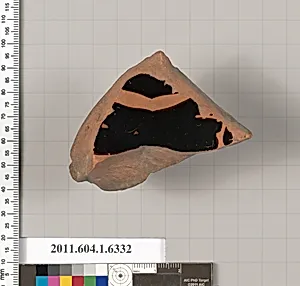
Terracotta fragment of a kylix (drinking cup)
500–480 BCE
Medium
Terracotta
Classification
Vases
Culture & Period
Greek, Attic · Archaic
Department
Greek and Roman Art
Museum
Metropolitan Museum of Art, New York, NY
Credit
Gift of Dietrich von Bothmer, Distinguished Research Curator, Greek and Roman Art, 2011
Accession Number
2011.604.1.6332
Rights
Public Domain
Art Historical Context
This exquisite terracotta fragment from a kylix, or shallow drinking cup, dates to 500–480 BCE and hails from Attic Greece during the late Archaic period. Craft by the renowned vase-painter Onesimos, one of Athens' master artists of the era, it exemplifies the red-figure technique that revolutionized Greek pottery. In this method, figures were outlined in black slip on the clay surface, with background details painted away to reveal the natural red terracotta—allowing for intricate details in anatomy, drapery, and expression that black-figure painting couldn't achieve. Kylikes like this were staples of the symposion, elite male drinking parties where philosophy, poetry, and revelry mingled. Onesimos, often collaborating with potters like the Berlin Painter, specialized in these cups, filling their wide interiors and exteriors with dynamic scenes of mythology, athletics, or daily life. Though only a fragment survives, it captures the period's artistic shift toward naturalism, bridging Archaic rigidity and the Classical grace to come. Now at the Metropolitan Museum of Art, thanks to a 2011 gift from curator Dietrich von Bothmer, this piece invites us to imagine the full vessel's lively narrative, offering a tangible link to ancient Athenian culture and its vibrant ceramic workshops.
About the Artist
Onesimos
**Onesimos** was an ancient Athenian vase painter who flourished in Athens around 500–480 BC. Specializing in the red-figure technique during the Early Classical period, he focused primarily on decorating drinking cups, most often of Type B. Over two hundred vessels have been attributed to him, reflecting his prolific output and high demand in the Attic pottery workshops.) His training appears cl...