
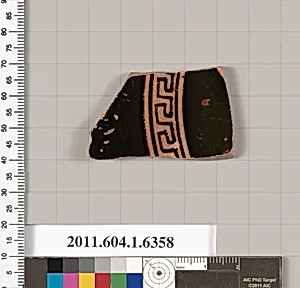
Terracotta fragment of a kylix (drinking cup)
500–480 BCE
Medium
Terracotta
Classification
Vases
Culture & Period
Greek, Attic · Archaic
Department
Greek and Roman Art
Museum
Metropolitan Museum of Art, New York, NY
Credit
Gift of Dietrich von Bothmer, Distinguished Research Curator, Greek and Roman Art, 2011
Accession Number
2011.604.1.6358
Rights
Public Domain
Art Historical Context
This exquisite terracotta fragment from alix—a shallow drinking cup popular in ancient Greek symposia—comes from the hand of Onesimos, a masterful Att vase painter active around 500–480 BCE. During the Archaic period, Attic potters and painters like Onesimos elevated everyday ceramics into works of art blending functionality with intricate decoration. Kylikes were prized for their wide, low profile, allowing drinkers to admire painted on the interior tondo while socializing. Though only a fragment survives, it the technical prowess of Greek terracotta: clay fired at high temperatures for durability and a warm reddish hue. Attic vases from this era the Archaic and emerging Classical styles, showcasing refined figural compositions that captured warriors, gods, and daily life. Onesimos's contributions highlight Athens' dominance in the pottery trade, exporting these vessels across the Mediterranean. Generously gifted to the Metropolitan Museum of Art in 2011 by Dietrich von Bothmer, Distinguished Research Curator of Greek and Roman Art, this piece invites us to ponder the lively banquets where it once served, connecting modern visitors to the vibrant world of ancient Greece.
About the Artist
Onesimos
**Onesimos** was an ancient Athenian vase painter who flourished in Athens around 500–480 BC. Specializing in the red-figure technique during the Early Classical period, he focused primarily on decorating drinking cups, most often of Type B. Over two hundred vessels have been attributed to him, reflecting his prolific output and high demand in the Attic pottery workshops.) His training appears cl...