
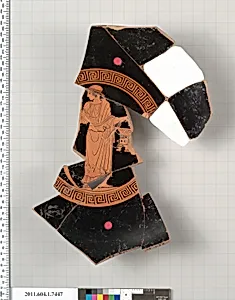
Terracotta fragment of a kylix (drinking cup)
Unknown Artist
490–470 BCE
Medium
Terracotta
Classification
Vases
Culture & Period
Greek, Attic · Late Archaic/Early Classical
Department
Greek and Roman Art
Museum
Metropolitan Museum of Art, New York, NY
Credit
Gift of Dietrich von Bothmer, Distinguished Research Curator, Greek and Roman Art, 2011
Accession Number
2011.604.1.7447
Rights
Public Domain
Art Historical Context
This terracotta fragment from a kylix, a shallow drinking cup popular in ancient Greece, dates to the Late Archaic/Early Classical period (490–470 BCE).ed in Attica, the heart of Athenian pottery production, it represents a time of artistic transition as Greek vase-painters moved toward the more naturalistic styles of the Classical era. Though only a fragment survives, it evokes the elegance of these vessels, which featured footed stems and wide mouths ideal for sipping wine at symposia—lively social gatherings of elite men discussing philosophy, poetry, and politics. Attic terracotta vases like this one were fired in kilns and often decorated using the innovative red-figure technique, where figures were outlined in black slip and details incised or painted, leaving the clay's natural red color to shine through. This method allowed for greater anatomical precision and expressive poses, marking a leap from the earlier black-figure style. Such cups were everyday luxuries, exported across the Mediterranean, spreading Greek culture and myths. A generous gift to the Metropolitan Museum of Art from Dietrich von Bothmer in 2011, this piece invites us to ponder the fragility of antiquity—most kylixes shattered long ago, yet fragments like this preserve a sip of history. (198 words)