
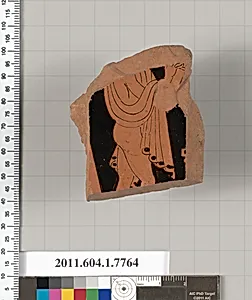
Terracotta fragment of a kylix (drinking cup)
Unknown Artist
460–450 BCE
Medium
Terracotta
Classification
Vases
Culture & Period
Greek, Attic · Classical
Department
Greek and Roman Art
Museum
Metropolitan Museum of Art, New York, NY
Credit
Gift of Dietrich von Bothmer, Distinguished Research Curator, Greek and Roman Art, 2011
Accession Number
2011.604.1.7764
Rights
Public Domain
Art Historical Context
This terracotta fragment from a kylix, or shallow drinking cup, hails from Attic Greece around 460–450 BCE, during the height of the Classical period. in Athens, the epicenter of ancient Greek artistry, kylikes like this were essential for symposia—lively social gatherings where elite men reclined, drank wine, and debated philosophy or poetry. Though only a piece survives, it offers a glimpse into the refined pottery workshops of the time, where artisans shaped clay on wheels and fired it in kilns to create durable, elegant vessels. Attic vases from this era are celebrated for their technical mastery and narrative decoration, often using the red-figure technique that allowed intricate details to emerge in the unglazed clay against a glossy black background. This fragment exemplifies the period's shift toward more naturalistic figures and dynamic compositions, reflecting Athens' cultural flourishing amid the Golden Age of Pericles. As part of the Metropolitan Museum of Art's Greek and Roman collection—generously gifted by Dietrich von Bothmer in 2011—it connects us to the daily rituals and aesthetic ideals of ancient Greeks, reminding us how everyday objects embodied profound artistry.