
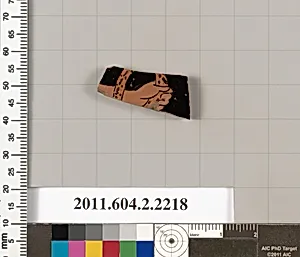
Terracotta fragment of a pot; unglazed on the inside
Unknown Artist
460–440 BCE
Medium
Terracotta
Classification
Vases
Culture & Period
Greek, Attic · Classical
Department
Greek and Roman Art
Museum
Metropolitan Museum of Art, New York, NY
Credit
Gift of Dietrich von Bothmer, Distinguished Research Curator, Greek and Roman Art, 2011
Accession Number
2011.604.2.2218
Rights
Public Domain
Art Historical Context
This terracotta fragment from a pot, dating to 460–440 BCE, a glimpse into the everyday artistry of Classical Attic Greece. Crafted in the heart of ancient Athens during its golden age—the era of the Parthenon Pericles—this unglazed piece on the inside reflects the practical side of Greek pottery production. Attic vases like this were wheel-thrown from fine clay, bisque-fired for durability, and often reserved unglazed internally to hold liquids without cracking, blending utility with aesthetic potential on the exterior. As a product of the High Classical period, the fragment embodies the technical mastery of Attic workshops, renowned for red-figure painting techniques that allowed artists to highlight anatomical precision and dynamic poses. Though incomplete, it survives as a testament to Greece's vibrant export trade in ceramics, which spread mythological tales and daily scenes across the Mediterranean. These vessels were not mere containers but cultural ambassadors, adorning symposia and sanctuaries. Generously gifted to the Metropolitan Museum of Art in 2011 by Dietrich von Bothmer, a leading scholar of Greek and Roman art, this piece invites us to ponder the skilled, anonymous hands behind Athens' ceramic legacy—hands that shaped a civilization's visual language.