
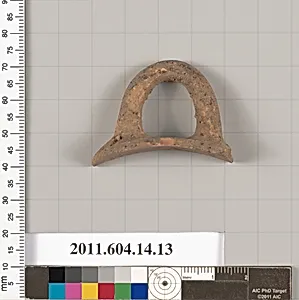
Terracotta fragment of a skyphos?
Unknown Artist
6th century BCE?
Medium
Terracotta
Classification
Vases
Culture
Unknown fabric
Department
Greek and Roman Art
Museum
Metropolitan Museum of Art, New York, NY
Credit
Gift of Dietrich von Bothmer, Distinguished Research Curator, Greek and Roman Art, 2011
Accession Number
2011.604.14.13
Rights
Public Domain
Art Historical Context
This terracotta fragment, possibly from a skyphos—a two-handled drinking cup popular in ancient Greece—offers a tantalizing glimpse into everyday life around the 6th century BCE. Housed in the Metropolitan Museum of Art's Greek and Roman Art Department, it exemplifies the fragile yet enduring legacy of Archaic pottery. Skyphoi were versatile vessels used in symposia, rituals, and households, blending utility with artistry in a culture where ceramics were a primary canvas for storytelling and decoration. Crafted from terracotta, a fired clay medium that allowed for mass production via potter's wheel and kiln techniques, this piece highlights the technical prowess of anonymous ancient artisans. Though the exact fabric (clay source and workshop) remains unknown, such fragments are invaluable for reconstructing lost vessels and tracing trade networks across the Greek world. The tentative date places it in an era of vibrant innovation, just before the classical peak, when pottery styles like black-figure were evolving. Generously gifted in 2011 by Dietrich von Bothmer, the Met's esteemed curator of Greek and Roman art, this shard invites us to ponder the hands that shaped it millennia ago—reminding visitors that even broken pieces hold profound cultural echoes.