
Terracotta fragment of an amphora (jar)
Unknown Artist
late 6th century BCE/early 5th century BCE
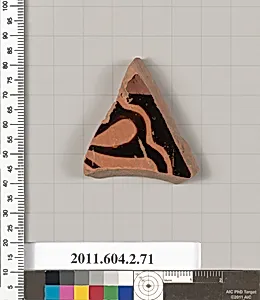
Medium
Terracotta
Classification
Vases
Culture & Period
Greek, Attic · Archaic
Department
Greek and Roman Art
Museum
Metropolitan Museum of Art, New York, NY
Credit
Gift of Dietrich von Bothmer, Distinguished Research Curator, Greek and Roman Art, 2011
Accession Number
2011.604.2.71
Rights
Public Domain
Art Historical Context
This terracotta fragment from an Attic amphora, dating to the late 6th or early 5th century, offers a glimpse into the vibrant of Archaic Greek pottery. Produced in Athens, the heart of Attic vase-making, amphorae like this were essential two-handled jars used for storing and wine, olive oil, or grain. Though only a fragment survives, it exemplifies the craftsmanship of a period when Greek artists mastered wheel-thrown terracotta, firing it to a warm reddish hue before applying intricate decorations. Attic vases from this era mark the transition from black-figure to pioneering red-figure techniques, where figures were outlined in black slip and details incised or painted, leaving the clay's natural color for skin tones. This innovation allowed for greater anatomical precision and narrative depth, reflecting myths, daily life, and athletic scenes that celebrated Greek identity. As part of the Metropolitan Museum of Art's Greek and Roman collection, gifted by renowned curator Dietrich von Bothmer in 2011, the fragment underscores the enduring allure of these everyday objects turned artistic treasures. Even in its incomplete state, it connects us to ancient trade routes and symposium culture, where such vases fueled social rituals. A testament to Archaic innovation, it invites us to imagine the full vessel's stories long lost to time.