
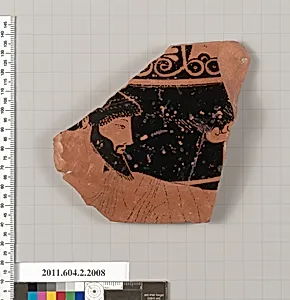
Terracotta fragment of an amphora (jar)
Unknown Artist
510–500 BCE
Medium
Terracotta
Classification
Vases
Culture & Period
Greek, Attic · Archaic
Department
Greek and Roman Art
Museum
Metropolitan Museum of Art, New York, NY
Credit
Gift of Dietrich von Bothmer, Distinguished Research Curator, Greek and Roman Art, 2011
Accession Number
2011.604.2.2008
Rights
Public Domain
Art Historical Context
This delicate terracotta fragment from an Attic amphora, dating to 510–500 BCE, offers a glimpse into the vibrant of late Archaic Greece. Crafted in Athens, the heart of ancient Greek pottery production, amphorae this were essential storage jars for olive oil and wine, often used in trade, symia, and religious rituals. Standing as a testament to everyday utility elevated to art, this piece captures the transition from the rigid Archaic style toward the more fluid forms of the Classical era. Terracotta, or fired clay, was the medium of choice for its durability and versatility, allowing potters to wheel-throw large vessels and decorate them with intricate black-figure or early red-figure techniques—though this fragment preserves only the vessel's form. Attic vases were prized exports, spreading Greek myths, heroes, and daily life across the Mediterranean, making them invaluable for understanding ancient culture without relying on fragile paintings or sculptures. Generously gifted to the Metropolitan Museum of Art in 2011 by Dietrich von Bothmer, a pioneering curator of Greek and Roman art, this shard underscores the ongoing fascination with Archaic pottery. Even in its incomplete state, it invites us to imagine the full amphora's grandeur and the skilled hands that shaped it over 2,500 years ago.