
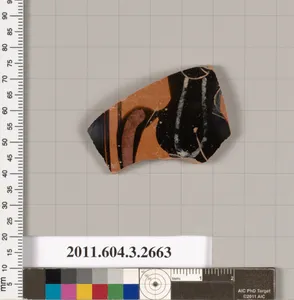
Terracotta fragment of an olpe (jug)
Unknown Artist
510–500 BCE
Medium
Terracotta
Classification
Vases
Culture & Period
Greek, Attic · Archaic
Department
Greek and Roman Art
Museum
Metropolitan Museum of Art, New York, NY
Credit
Gift of Dietrich von Bothmer, Distinguished Research Curator, Greek and Roman Art, 2011
Accession Number
2011.604.3.2663
Rights
Public Domain
Art Historical Context
This terracotta fragment from an olpe, or slender jug, dates to the late Archa period (510–500 BCE) hails from Attic Greece, a hub of artistic innovation in ancient Athens. Olpes like this were practical vessels for pouring wine, oil, or water during symposia—lively social gatherings where elite men debated philosophy and politics. Though only a fragment survives, it exemplifies the exquisite pottery craftsmanship of Attic workshops, where potters and painters collaborated to create functional art that adorned everyday life and rituals. Terracotta, fired clay valued for its durability and versatility, was the medium of choice for Greek vases, often decorated with black-figure or emerging red-figure techniques that showcased mythological scenes or daily motifs. This piece, gifted to the Metropolitan Museum of Art in 2011 by renowned curator Dietrich von Bothmer, reflects the Archaic era's shift toward more naturalistic forms and dynamic compositions, bridging the rigid geometry of earlier styles and the fluid grace of the Classical age. Its survival offers a tangible link to ancient Athenian culture, where such vases were exported across the Mediterranean, spreading Greek ideals of beauty and symmetry. (198 words)