
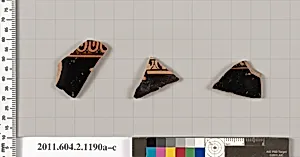
Terracotta fragments from closed shapes
Unknown Artist
475–400 BCE
Medium
Terracotta
Classification
Vases
Culture & Period
Greek, Attic · Classical
Department
Greek and Roman Art
Museum
Metropolitan Museum of Art, New York, NY
Credit
Gift of Dietrich von Bothmer, Distinguished Research Curator, Greek and Roman Art, 2011
Accession Number
2011.604.2.1190a–c
Rights
Public Domain
Art Historical Context
These terracotta fragments hail from closed-shape vases crafted in Attic Greece during the Classical period (475–400 BCE), golden age of Athenian artistry following the Persian Wars. Produced in workshops near Athens, such vases—likely lekythoi or aryballoi with narrow necks—served practical purposes like storing oils, perfumes, or unguents for daily rituals, symposia, andary offerings. Though the artist remains unknown, these pieces reflect the refined aesthetics of Attic pottery, renowned for its balance of form and subtle decoration. Terracotta, fired clay, was the medium of choice for its durability and affordability, enabling mass production while showcasing masterful techniques like red-figure painting, where figures emerged in the natural clay color against a glossy black slip background. The fragments preserve glimpses of this innovation, highlighting the era's shift from black-figure to more naturalistic depictions of gods, heroes, and daily life. A generous gift to the Metropolitan Museum of Art from Dietrich von Bothmer in 2011, these shards offer a tangible link to ancient Greek culture, inviting us to reconstruct the vibrancy of Classical Athens through their weathered elegance. (198 words)