
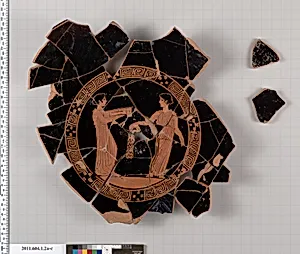
Terracotta fragments of a kylix (drinking cup)
Unknown Artist
mid-5th century BCE
Medium
Terracotta
Classification
Vases
Culture & Period
Greek, Attic · Classical
Department
Greek and Roman Art
Museum
Metropolitan Museum of Art, New York, NY
Credit
Gift of Dietrich von Bothmer, Distinguished Research Curator, Greek and Roman Art, 2011
Accession Number
2011.604.1.2a–c
Rights
Public Domain
Art Historical Context
These terracotta fragments from a kylix, a shallow two-handled drinking cup, hail from Attic Greece in the mid-5th BCE, the heart of the Classical period. in Athens, the epicenter of ancient Greek pottery, such vases were everyday luxuries used in symposia—lively social gatherings where men reclined, drank wine, and debated philosophy or recited poetry. Though incomplete, these shards offer a glimpse into the refined craftsmanship of Athenian workshops, where potters shaped vessels on fast-spinning wheels before firing them in kilns to achieve their warm, durable terracotta hue. Attic kylikes were artistic canvases, often painted in the innovative red-figure technique (common by this era), where figures emerged in the natural clay color against a glossy black background. Designs typically depicted myths, athletes, or revelers, blending beauty with function and reflecting the democratic ideals and cultural vibrancy of Periclean Athens. As fragments, they highlight the fragility of antiquity yet underscore their scholarly value—pieced together like puzzles to reveal lost stories. Generously donated to the Metropolitan Museum of Art in 2011 by Dietrich von Bothmer, a legendary curator of Greek and Roman art, these pieces invite us to toast the enduring legacy of ancient innovation. Imagine sipping from one amid olive groves—what tales might they whisper?