
Terracotta fragments of a lekythos (oil flask)?
Unknown Artist
second half of the 4th century BCE
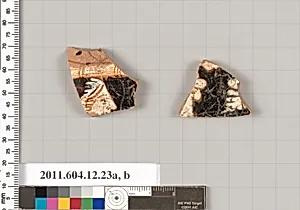
Medium
Terracotta
Classification
Vases
Culture & Period
Greek, Attic · Classical
Department
Greek and Roman Art
Museum
Metropolitan Museum of Art, New York, NY
Credit
Gift of Dietrich von Bothmer, Distinguished Research Curator, Greek and Roman Art, 2011
Accession Number
2011.604.12.23a, b
Rights
Public Domain
Art Historical Context
These terracotta fragments from a lekythos, or slender oil flask, offer a glimpse into everyday life in ancient Athens during the late Classical period (second half of the th century BCE). Produced in Attic workshops, lekythoi were practical vessels for storing perfumed oils, cosmetics, or olive oil, but they held special ritual importance—often used in funerary offerings to honor the dead. Though incomplete, these shards preserve the elegant, elongated form typical of Greek pottery, shaped on a potter's wheel from fired clay for durability and subtle sheen. Artistically, Attic terracotta vases like this exemplify the mastery of Classical Greek ceramics, blending functionality with refined aesthetics. Potters and painters in Athens innovated techniques such as red-figure decoration (though not visible here), allowing intricate scenes of mythology, daily life, or funerary rites to emerge vividly against the orange clay background. This piece reflects the period's shift toward more graceful, less rigid forms as Greece transitioned toward the Hellenistic era. A generous gift to the Metropolitan Museum of Art in 2011 from Dietrich von Bothmer, a leading scholar of Greek art, these fragments enrich our understanding of Attic craftsmanship. They remind us how even broken artifacts whisper stories of ancient customs, trade, and devotion. (198 words)