
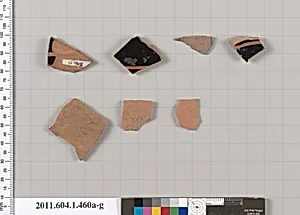
Terracotta fragments of kylikes (drinking cups)
Unknown Artist
5th century
Medium
Terracotta
Classification
Vases
Culture & Period
Greek, Attic · Archaic /Classical
Department
Greek and Roman Art
Museum
Metropolitan Museum of Art, New York, NY
Credit
Gift of Dietrich von Bothmer, Distinguished Research Curator, Greek and Roman Art, 2011
Accession Number
2011.604.1.460a–g
Rights
Public Domain
Art Historical Context
These terracotta fragments from 5th-century BCE Attic kylikes—shallow drinking cups with stemmed bases—offer a glimpse into the vibrant of ancient Greek symposia, elite social gatherings where wine flowed and intellectual discourse thrived. Produced in Athens during the transition from the Archaic to Classical periods, these vessels everyday luxuries, crafted for both practical use and aesthetic delight. As part of the Metropolitan Museum of Art's Greek and Roman Art collection, gifted 2011 by renowned curator Dietrich von Bothmer, they exemplify the technical mastery of Attic potters. Terracotta, fired clay abundant in Greece, was the ideal medium for these vases, allowing intricate wheel-thrown forms and durable designs. Artisans likely employed the red-figure technique, popular in the 5th century, where background figures were painted black, leaving natural clay figures in reserve for detailed incised details—revealing gods, heroes, or revelers in dynamic scenes. Though fragmented, these pieces preserve traces of such storytelling, highlighting how pottery bridged art and ritual in Athenian life. Their survival underscores the enduring allure of Greek ceramics, which influenced later Western art. Visitors can appreciate how these modest shards once animated banquets, embodying the cultural pinnacle of Classical Greece.