
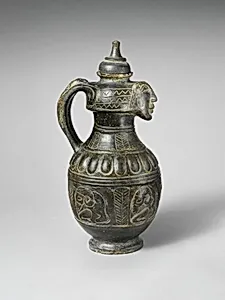
Terracotta jug with lid
Unknown Artist
ca. 575–550 BCE
Medium
Terracotta
Dimensions
H. with cover 11 7/16 in. (29.1 cm); H. without cover 9 13/16 in. (24.9 cm)
Classification
Vases
Culture & Period
Etruscan · Archaic
Department
Greek and Roman Art
Museum
Metropolitan Museum of Art, New York, NY
Credit
Purchase, 1896
Accession Number
96.9.80a, b
Rights
Public Domain
Tags
Art Historical Context
This elegant terracotta jug with lid, crafted by an unknown Etruscan artist around 575–550 BCE, the Archaic period's vibrant pottery tradition in ancient Italy. Standing 11 7/16 inches (29.1 cm) tall with cover, this functional vase was likely used for storing or pouring liquids like wine or oil in a prosperous household. Acquired by the Metropolitan Museum of Art through purchase in 1896 it now resides in the Greek and Roman Department, showcasing Etruscan ingenuity before Rome's dominance. Etruscan artisans excelled in terracotta—a fired clay medium valued for its durability and versatility—often decorating vessels with incised or painted motifs drawn from mythology. The tag "Monsters" hints at fantastical creatures adorning its surface, a common theme reflecting the Etruscans' rich worldview influenced by Greek imports yet distinctly their own. These designs not only beautified everyday objects but also warded off evil or celebrated heroic tales. Imagine this jug gracing a banquet table, its lid sealing precious contents amid lively gatherings. Its survival speaks to the Etruscans' advanced kiln techniques and cultural emphasis on refined domestic arts, bridging utility and artistry in the pre-Roman world.