
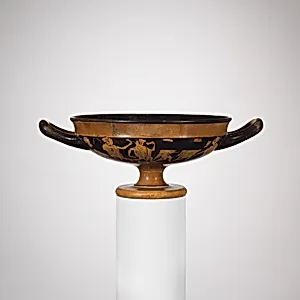
Terracotta kylix (drinking cup)
ca. 500 BCE
Medium
Terracotta
Dimensions
H. 3 5/8 in. (9.2 cm) diameter 7 1/4 in. (18.4 cm)
Classification
Vases
Culture & Period
Greek, Attic · Archaic
Department
Greek and Roman Art
Museum
Metropolitan Museum of Art, New York, NY
Credit
Rogers Fund, 1907
Accession Number
07.286.47
Rights
Public Domain
Tags
Art Historical Context
This elegant terracotta kylix, drinking cup, crafted by the Hegesib Painter around 500 BCE, exemplifies the artistry of Attic Greek pottery during the late Archaic period. Measuring just 3⅝ inches high and 7¼ inches in diameter, its shallow bowl and horizontal handles made it ideal for the symposia—lively social gatherings where elite Athenian men reclined, drank wine, and engaged in intellectual discourse. Attributed to the Rogers Fund of 1907 at the Metropolitan Museum of Art it hails from the vibrant world of Greek and Roman Art. The vase's black-figure technique, a hallmark of Archaic pottery, features incised figures fired black against a reddish clay background, with added details in purple and white. Scenes of men and dogs, tied to themes of drinking and companionship, evoke the sympotic culture central to ancient Greek life. Dogs often symbolized loyalty or hunting prowess, adding layers of everyday heroism and revelry to these vessels, which doubled as storytelling canvases. As a snapshot of transitioning Archaic styles—bridging black-figure traditions toward the innovative red-figure—this kylix highlights the technical mastery and cultural rituals of classical Athens, inviting us to sip from history's cup.
About the Artist
Hegesiboulos Painter|Hegesiboulos ( | ) · | – |
|