
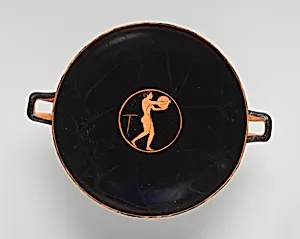
Terracotta kylix (drinking cup)
ca. 510 BCE
Medium
Terracotta
Dimensions
H. 5 1/16 in. (12.8 cm); diameter 13 3/8 in. (33.9 cm); width with handles 16 3/4 in. (42.6 cm)
Classification
Vases
Culture & Period
Greek, Attic · Archaic
Department
Greek and Roman Art
Museum
Metropolitan Museum of Art, New York, NY
Credit
Rogers Fund, 1941
Accession Number
41.162.128
Rights
Public Domain
Art Historical Context
Welcome to the Greek and Roman Art galleries at the Metropolitan Museum of Art where this elegant terracotta kylix, crafted by the Epele Painter around 510 BCE, invites you into the lively world of ancient Athens. This shallow, wide-mouthed drinking cup—measuring just over 5 inches tall but spanning nearly 17 inches across with its handles—was designed for the symposion, the quintessential Greek social gathering of men sharing wine, conversation, and poetry. Hailing from Attica during the late Archaic period, it exemplifies the pinnacle of Greek vase-painting, where terracotta vessels served not just as functional objects but as canvases for storytelling through intricate painted scenes. The Epeleios Painter, named for his distinctive style, contributed to the vibrant pottery workshops that made Athens a hub of artistic innovation and export. Its modest height belies its cultural heft: such kylikes were prized possessions, often filled with diluted wine and passed hand-to-hand in ritualized revelry. Acquired through the Rogers Fund in 1941, this piece offers a tangible link to Archaic Greece's transition toward Classical ideals, blending everyday utility with artistic mastery in fired clay. Pause and imagine the laughter echoing as it circulated among friends!