
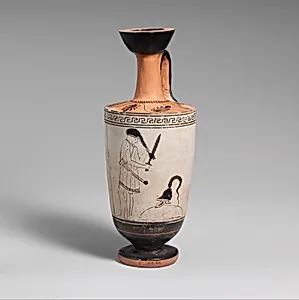
Terracotta lekythos (oil flask)
ca. 470–460 BCE
Medium
Terracotta
Dimensions
H. 5 1/2 in. (14 cm); diameter 2 5/8 in. (6.7 cm); H. as restored 6 7/8 in. (17.5 cm)
Classification
Vases
Culture & Period
Greek, Attic · Classical
Department
Greek and Roman Art
Museum
Metropolitan Museum of Art, New York, NY
Credit
Rogers Fund, 1907
Accession Number
07.286.44
Rights
Public Domain
Tags
Art Historical Context
This elegant terracotta lekythos, created in Athens around 470–460 BCE during Greece’s Classical period, served as a small oil flask for everyday or ritual use. Standing just over five inches tall, it exemplifies the refined Attic vase-painting tradition, when artists began favoring more naturalistic proportions and expressive figures. The vessel’s slender shape and narrow neck were designed to dispense precious oil slowly, whether for anointing the body or for offerings at tombs. Attributed to the Painter of the Yale Lekythos, the decoration features warriors in helmets and carrying swords, their hair and armor rendered with careful attention to detail. Such martial imagery reflects the cultural importance of military valor in Athenian society following the Persian Wars, when heroic themes gained renewed prominence in art. The red-figure technique likely employed here allowed the painter to achieve greater anatomical accuracy and subtle interior markings compared with earlier black-figure methods. Acquired by the Metropolitan Museum through the Rogers Fund in 1907, this modest yet finely crafted flask offers modern viewers a direct connection to the daily and ceremonial life of ancient Greece. Its compact scale and graceful form highlight how even functional objects became vehicles for artistic expression and storytelling in the Classical age.