
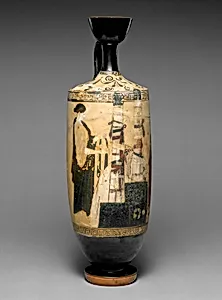
Terracotta lekythos (oil flask)
ca. 460–450 BCE
Medium
Terracotta
Dimensions
Overall: 16 11/16 x 5 7/16in. (42.4 x 13.8cm)
Classification
Vases
Culture & Period
Greek, Attic · Classical
Department
Greek and Roman Art
Museum
Metropolitan Museum of Art, New York, NY
Credit
Purchase, Anonymous Gift, 1935
Accession Number
35.11.5
Rights
Public Domain
Tags
Art Historical Context
This elegant terracotta lekythos, created by the Vouni Painter around 460–450 BCE, exemplifies the refined artistry of Classical Athens. As an oil flask, it was designed to hold perfumed oil, a precious commodity in ancient Greece. Its graceful proportions and Attic origin place it firmly within the vibrant tradition of Athenian vase painting, a period marked by increasing naturalism and emotional depth in figural scenes. Lekythoi like this one held particular importance in funerary rituals. The tags referencing men, women, and burials suggest it likely depicts mourning figures or a graveside scene, common on vessels intended as grave offerings. Such works allowed families to honor the deceased while showcasing the painter’s skill in rendering drapery and gesture on the curved surface. Acquired by the Metropolitan Museum in 1935, this vessel offers modern viewers a tangible connection to ancient Greek beliefs about death and remembrance. Its survival highlights the enduring legacy of Attic ceramics in shaping our understanding of Classical culture.