
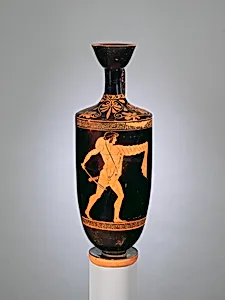
Terracotta lekythos (oil flask)
ca. 460–450 BCE
Medium
Terracotta
Dimensions
H. 14 7/8 in. (37.8 cm); diameter 5 1/16 in. (12.9 cm)
Classification
Vases
Culture & Period
Greek, Attic · Classical
Department
Greek and Roman Art
Museum
Metropolitan Museum of Art, New York, NY
Credit
Rogers Fund, 1941
Accession Number
41.162.15
Rights
Public Domain
Tags
Art Historical Context
This elegant terracotta lekythos, crafted around 460–450 BCE by the Oionokles Painter, exemplifies the refined artistry of Classical Athens. Standing nearly fifteen inches tall, the slender oil flask was likely used to store perfumed oil for athletic or funerary rituals. Its red-figure decoration, characteristic of Attic vase painting in this period, highlights the male nude—a recurring motif that celebrated the idealized human form central to Greek culture. The Oionokles Painter worked during Athens’ golden age, a time when vase painters explored naturalistic poses and expressive gestures. Though his hand is recognized by distinctive figure drawing and compositional choices, the vessel’s graceful proportions and balanced ornament reflect broader artistic developments of the era. Such lekythoi often accompanied the deceased, underscoring the Greek belief in honoring the body even in death. Today housed in the Metropolitan Museum of Art, this piece invites visitors to appreciate how everyday objects became vehicles for aesthetic and cultural ideals. Its survival offers a vivid window into fifth-century BCE Athens, where art seamlessly merged utility, ritual, and the celebration of human beauty.