
Terracotta loom weight
Unknown Artist
6th century BCE or later
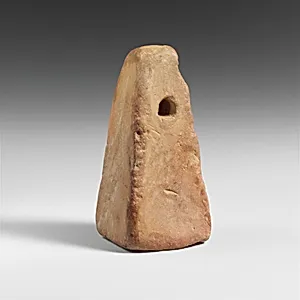
Medium
Terracotta
Dimensions
Length: 2 in. (5 cm)
Classification
Terracottas
Culture & Period
Lydian · Archaic or later
Department
Greek and Roman Art
Museum
Metropolitan Museum of Art, New York, NY
Credit
Gift of The American Society for the Excavation of Sardis, 1926
Accession Number
26.199.90
Rights
Public Domain
Art Historical Context
This unassuming terracotta loom weight, measuring just 2 inches (5 cm) in length, offers a tangible glimpse into the daily life of ancient Lydia, a prosperous kingdom in western Anatolia (modern-day Turkey) during the Archaic period or later, around the 6th century BCE Excavated from Sardis, the Lydian capital famed for its wealth under King Croesus—who reputedly made the first gold coins—these weights were essential tools in household weaving. Women suspended them from warp threads on vertical looms to maintain tension, enabling the production of woolen textiles vital for clothing, trade, and even royal garments. Crafted from fired clay, a durable and abundant medium, the weight exemplifies Lydian terracotta craftsmanship: simply shaped yet functional, often pierced for suspension. Such artifacts, classified among Greek and Roman terracottas at the Metropolitan Museum of Art (gift of the American Society for the Excavation of Sardis, 1926), highlight the unsung role of domestic industry in ancient economies. Far from elite art, it underscores Lydia's blend of innovation and everyday ingenuity, revealing how ordinary objects wove the fabric of society. (198 words)