
Terracotta neck-amphora (jar)
ca. 570–560 BCE
Medium
Terracotta
Dimensions
H. 13 9/16 in. (34.4 cm); diameter of mouth 5 11/16 in. (14.4 cm); diameter of foot 4 9/16 in. (11.5 cm)
Classification
Vases
Culture & Period
Greek, Attic · Archaic
Department
Greek and Roman Art
Museum
Metropolitan Museum of Art, New York, NY
Credit
Fletcher Fund, 1956
Accession Number
56.171.16
Rights
Public Domain
Tags
Art Historical Context
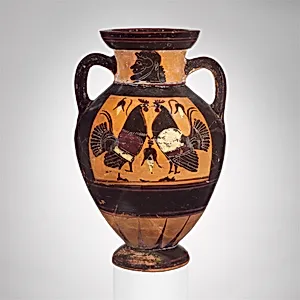
This elegant terracotta neck-amph, crafted by the Painter of London B76 around 570–560 BCE, exemplifies Attic black-figure pottery from Archaic Greece. Standing just over 13 inches tall, two-handled jar was designed for storing and pouring oil or wine, a staple in ancient Greek households and symposia. Attributed to an anonymous artist named after a vase in London's British Museum, it reflects the vibrant workshop culture of Athens, where potters and painters collaborated to produce exportable masterpieces. The vase's decoration bursts with dynamic motifs: armored men wielding shields, alongside roosters and birds, likely evoking themes of warfare, vigilance, or mythological prowess. In black-figure technique—pioneered in the 7th century BCE—silhouetted figures are painted in glossy black slip over red clay, with intricate details incised using a sharp tool to reveal the underlying color. This method allowed for bold contrasts and fine anatomical rendering, showcasing the artist's skill in capturing movement and symbolism. As a product of Athens' golden age of vase-painting, this amphora offers a glimpse into Archaic Greek values: heroism, daily life, and nature's emblems. Acquired by The Metropolitan Museum of Art in 1956, it stands as a testament to the enduring allure of these ancient vessels, bridging us to a world of gods, warriors, and roosters strutting eternally.