
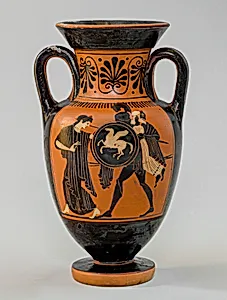
Terracotta neck-amphora (jar)
ca. 500 BCE
Medium
Terracotta
Dimensions
H. 7 7/16 in. (18.9 cm) diameter of mouth 3 3/16 in. (8.1 cm) diameter of foot 2 5/16 in. (5.9 cm)
Classification
Vases
Culture & Period
Greek, Attic · Archaic
Department
Greek and Roman Art
Museum
Metropolitan Museum of Art, New York, NY
Credit
Fletcher Fund, 1956
Accession Number
56.171.26
Rights
Public Domain
Tags
Art Historical Context
This exquisite terracotta neck-amph, crafted by the Diosphos Painter 500 BCE, exemplifies Attic Greek pottery from the Archaic period. just 7 7/16 inches tall, this compact jar—likely used for storing oil or wine—was a staple of everyday life and elite banquets in ancient Athens. The Diosphos Painter, an anonymous master identified by his distinctive style, worked in the waning years of the black-figure technique, where figures were painted in glossy black slip against a clay-red ground, then incised to reveal details. The vase's decoration bursts with mythological drama, featuring warriors brandishing shields, the Trojan hero Aeneas, and loyal dogs—evoking tales from the Trojan War and Aeneas's epic escape from burning Troy. These scenes highlight the Archaic Greeks' fascination with heroism, lineage, and the divine, blending narrative storytelling with symbolic motifs like protective shields and faithful hounds. Housed in the Metropolitan Museum of Art's Greek and Roman Art department (acquired via the Fletcher Fund in 1956), this amphora offers a window into Athens' cultural zenith, where pottery doubled as portable art, traded across the Mediterranean and preserving myths for eternity. A true gem for any visitor!