
Terracotta oil lamp
Unknown Artist
1st century BCE–1st century CE
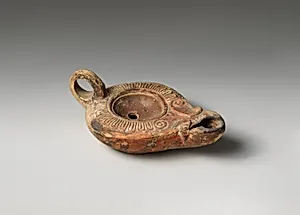
Medium
Terracotta
Dimensions
Overall: 2 1/4 x 5 5/8 in. (5.7 x 14.3 cm)
Classification
Terracottas
Culture & Period
Roman · Early Imperial
Department
Greek and Roman Art
Museum
Metropolitan Museum of Art, New York, NY
Credit
The Cesnola Collection, Purchased by subscription, 1874–76
Accession Number
74.51.2065
Rights
Public Domain
Art Historical Context
This unassuming terracotta oil lamp dating to the 1st century BCE–1st CE, offers a glimpse into the everyday world Early Imperial Rome. Measuring just 2¼ x 5⅝ inches (5.7 x 14.3 cm), it exemplifies the practical artistry of Roman terracottas—molded clay objects fired at high temperatures for durability and affordability. Produced in workshops across the empire, such lamps were essential household items, fueled by olive oil and a wick to provide soft, flickering light in homes, workshops, and public spaces long before modern electricity. Terracotta's versatility made it ideal for mass production, allowing intricate designs on some lamps while keeping costs low for all social classes. This example, classified among the Metropolitan Museum of Art's Greek and Roman treasures, reflects the period's cultural flourishing under emperors like Augustus, when Rome's influence spread innovations in daily life. Oil lamps often bore symbolic motifs—though specifics here are unknown—serving both functional and ritual purposes in domestic and funerary contexts. Acquired through The Cesnola Collection (purchased by subscription, 1874–76), this artifact bridges us to ancient routines, reminding visitors how simple objects illuminated grand civilizations. A testament to Roman ingenuity, it invites you to imagine its glow in a bustling villa.