
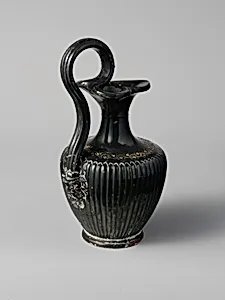
Terracotta oinochoe (jug)
ca. 300 BCE
Medium
Terracotta
Dimensions
H. 8 1/16 in. (20.5 cm)
Classification
Vases
Culture & Period
Etruscan · Hellenistic
Department
Greek and Roman Art
Museum
Metropolitan Museum of Art, New York, NY
Credit
Rogers Fund, 1903
Accession Number
03.24.22
Rights
Public Domain
Tags
Art Historical Context
This charming terracotta oinocho, or wine jug, hails from Etruscan culture around 300 BCE during the Hellenistic period—a time when Etruscan artisans eagerly adopted Greek artistic influences while maintaining their distinctive flair. Crafted by the Group of O.565, a known for lively pottery, this modest vessel stands just over 8 inches tall, perfect for daily use or symposia feasts. Acquired by the Metropolitan Museum of Art in 1903 through the Rogers Fund, it exemplifies the vibrant world of ancient Italy before Roman dominance. The jug's decoration features exuberant satyr heads, those mischievous, half-human, half-beast followers of Dionysus, symbolizing revelry and the joys of wine. Etruscans, famed for their love of banquets and mythology, rendered these figures in terracotta—a durable, earthy medium fired for strength and often painted for color (though time has faded much of it). This Hellenistic style brought more dynamic poses and expressive faces compared to earlier rigidity, highlighting Etruscan innovation in vase painting. As a snapshot of pre-Roman life, this oinochoe invites us to picture ancient hands pouring libations, blending utility with myth. A true gem in the Met's Greek and Roman collection!