
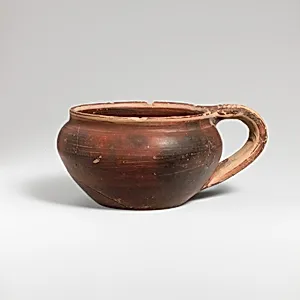
Terracotta one-handled cup
Unknown Artist
late 8th century BCE
Medium
Terracotta
Dimensions
H. 2 1/2 in. (6.3 cm)
Classification
Vases
Culture & Period
Greek, Attic · Geometric
Department
Greek and Roman Art
Museum
Metropolitan Museum of Art, New York, NY
Credit
Gift of the Greek Government, 1930
Accession Number
30.118.41
Rights
Public Domain
Art Historical Context
This delicate terracotta one-handled, standing just 2 1/2 inches (6.3 cm) tall, hails from late 8th-century BCE Attica, the heartland of ancient Greece modern Athens. Crafted the Geometric period, it exemplifies the early resurgence of artistic expression after the Greek Dark Ages, when potters revived wheel-thrown techniques to produce functional yet elegantly proportioned vessels for daily use, rituals, or symposia. As a quintessential Attic Geometric vase, this cup likely features the era's hallmark abstract motifs—repeating patterns of meanders, triangles, and zigzags painted in lustrous black slip on a fired clay body. Terracotta's durability made it ideal for both household items and grave offerings, offering glimpses into a society transitioning toward the classical world, with influences from trade and migration shaping its simple, balanced form. Its single handle suggests practicality for sipping wine or water. A generous gift from the Greek Government in 1930, this piece now graces the Metropolitan Museum of Art's Greek and Roman Art department. Though small, it whispers of ancient lives, inviting us to ponder the ingenuity of unnamed artisans who laid the foundations of Western art.