
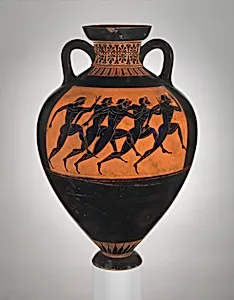
Terracotta Panathenaic prize amphora
ca. 530 BCE
Medium
Terracotta
Dimensions
H. 24 1/2 in. (62.2 cm)
Classification
Vases
Culture & Period
Greek, Attic · Archaic
Department
Greek and Roman Art
Museum
Metropolitan Museum of Art, New York, NY
Credit
Rogers Fund, 1914
Accession Number
14.130.12
Rights
Public Domain
Tags
Art Historical Context
Step into ancient Athens with this striking terracotta Panathena prize amphora, crafted by the Euphilet Painter around 530 BCE during the Archaic period. elegant vases were awarded as prizes to victors in the Panathenaic Games, Athens' grand festival honoring the goddess Athena. Filled with olive oil from the sacred groves of Athena, they symbolized civic pride and athletic excellence, much like Olympic laurels today. Standing at 24½ inches tall, this Attic black-figure vessel exemplifies the period's mastery of clay, fired to a glossy black sheen with incised details revealing the figures beneath. The amphora's dynamic scene captures nude male athletes in motion—running with shields in hand—evoking the hoplitodromos, a grueling armored footrace that tested speed and endurance. The Euphiletos Painter, active in late Archaic Athens, used the black-figure technique: silhouettes of figures scratched to show anatomy and movement, accented with purple and white clay for vivid drama. Male nudity here celebrates the Greek ideal of the harmoniously trained body, blending sport, religion, and artistry. As a Rogers Fund acquisition at the Metropolitan Museum of Art, this amphora offers a window into Archaic Greece's cultural zenith, where pottery wasn't just functional but a canvas for storytelling and competition. A true treasure of athletic heroism!
About the Artist
Euphiletos Painter
Athenian black-figure vase painter best known for his Panathenaic vases.