
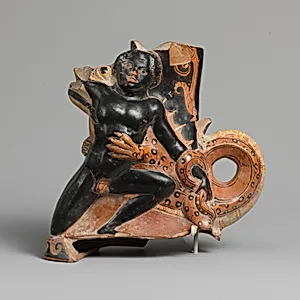
Terracotta rhyton (vase for libations or drinking)
Unknown Artist
ca. 350–300 BCE
Medium
Terracotta
Dimensions
H. 6 1/8 in. (15.6 cm)
Classification
Vases
Culture & Period
Greek, South Italian, Apulian · Late Classical
Department
Greek and Roman Art
Museum
Metropolitan Museum of Art, New York, NY
Credit
Rogers Fund, 1955
Accession Number
55.11.3
Rights
Public Domain
Tags
Art Historical Context
This exquisite terracotta rhyton crafted around 350–300 BCE by an unknown Apulian artist in South Italy, exemplifies the vibrant pottery traditions of Greek colonists in the region during the Late Classical period. Standing just 6 1/8 inches (15.6 cm) tall, this vase-shaped vessel was designed for pouring libations to the gods or sipping wine at symposia—lively social gatherings central to ancient Greek life. Apulian pottery, known for its bold red-figure technique, often featured elaborate narratives drawn from mythology, theater, and daily rituals, blending Eastern influences with local flair. The rhyton's surface likely showcases dynamic scenes of male nudes and exotic crocodiles, motifs that evoke Dionysiac revelry or adventures in far-off lands like the Nile, symbolizing fertility, danger, and the wild. These elements highlight the Apulians' fascination with the dramatic and the fantastical, using terracotta's earthy warmth to bring stories to life through intricate slip painting and incised details. Such vases were prized grave goods, underscoring their role in bridging the mortal world and the afterlife. Today, this Rogers Fund acquisition graces the Metropolitan Museum of Art's Greek and Roman Art collection, offering a window into the cosmopolitan world of ancient Magna Graecia—where art, ritual, and storytelling intertwined.