
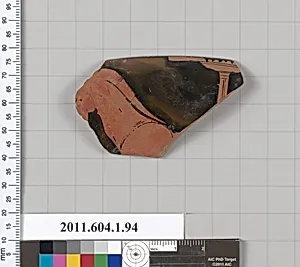
Terracotta rim fragment of a kylix (drinking cup)
second quarter of the 5th century BCE
Medium
Terracotta
Classification
Vases
Culture & Period
Greek, Attic · Classical
Department
Greek and Roman Art
Museum
Metropolitan Museum of Art, New York, NY
Credit
Gift of Dietrich von Bothmer, Distinguished Research Curator, Greek and Roman Art, 2011
Accession Number
2011.604.1.94
Rights
Public Domain
Art Historical Context
This delicate terracotta rim fragment from a kylix, or shallow drinking cup, hails from Attic Greece in the second quarter of the5th century BCE, the vibrant Classical period. Attributed to the Painter of London D 12 anonymous master vase painter identified by modern scholars through stylistic analysis—it exemplifies the exquisite red-figure technique typical of Athenian workshops. These cups were essential for symposia, lively social gatherings where elite men reclined, drank wine, and debated philosophy, making pottery like this a window into everyday elite culture. Kylixes were prized for their functionality and artistry: the wide, low shape allowed easy sipping while reclining, and their painted scenes often depicted myths, athletes, or revelers. Though only a rim survives, its preservation highlights the durability of terracotta—fired clay vessels that were mass-produced yet finely decorated—and Athens' dominance in exporting them across the Mediterranean, spreading Greek ideals of beauty and harmony. A generous gift to the Metropolitan Museum of Art from Dietrich von Bothmer in 2011, this fragment underscores the detective work of connoisseurs in naming ancient artists and reconstructing lost masterpieces. It invites us to imagine the full cup's lively narrative, bridging 2,500 years to the symposia of ancient Athens.
About the Artist
Painter of London D 12
### Painter of London D 12 The Painter of London D 12 was an anonymous ancient Greek vase painter active in Attica during the late Archaic period, around 520–500 BCE. Named by the pioneering scholar Sir John Beazley after a specific black-figure hydria (water jar) in the British Museum's collection (inventory number D 12), this artist exemplifies the anonymous masters of Attic pottery workshops. ...