
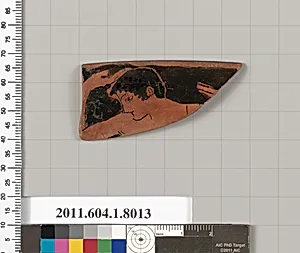
Terracotta rim fragment of a kylix (drinking cup)
510–500 BCE
Medium
Terracotta
Classification
Vases
Culture & Period
Greek, Attic · Archaic
Department
Greek and Roman Art
Museum
Metropolitan Museum of Art, New York, NY
Credit
Gift of Dietrich von Bothmer, Distinguished Research Curator, Greek and Roman Art, 2011
Accession Number
2011.604.1.8013
Rights
Public Domain
Art Historical Context
This delicate terracotta rim fragment from kylix, or shallow drinking cup, dates to510–500 BCE andails from Attic Greece during the Archaic period.ed by the Euerg Painter, a notable figure in late Archaic vase painting, it exemplifies the refined black-figure technique transitioning toward the innovative red-figure style. These kylikes were essential to symposia—lively Greek social gatherings where wine flowed and philosophical debates unfolded—highlighting their role in everyday culture. The fragment's terracotta medium, fired clay painted with slip, allowed for intricate details on the vessel's rim, likely featuring figures or motifs typical of the Euergides Painter's dynamic compositions, such as youths or mythological scenes. As a product of Athenian potters, it reflects the peak of Archaic pottery export, spreading Greek artistry across the Mediterranean. Donated to the Metropolitan Museum of Art in 2011 by Dietrich von Bothmer, this piece offers a tantalizing glimpse into ancient craftsmanship, reminding us how even shards preserve vibrant histories.