
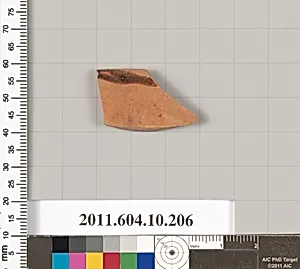
Terracotta rim fragment of a kylix (drinking cup)
Unknown Artist
6th century BCE
Medium
Terracotta
Classification
Vases
Culture & Period
Etruscan · Archaic
Department
Greek and Roman Art
Museum
Metropolitan Museum of Art, New York, NY
Credit
Gift of Dietrich von Bothmer, Distinguished Research Curator, Greek and Roman Art, 2011
Accession Number
2011.604.10.206
Rights
Public Domain
Art Historical Context
This delicate terracotta rim fragment from kylix, or shallow drinking cup, hails from Etruscan culture in theic period, around the 6th BCE. Crafted in terracotta—a fired clay favored for its durability and versatility—the piece exemplifies the Etruscans' mastery of pottery, often used for both everyday banquets and elite symposia. Though only a fragment survives, it hints at the elegant, wide-mouthed form of the kylix, ideal for sipping wine while reclining at gatherings. Etruscan artisans eagerly adopted Greek vase shapes and techniques during this era, blending them with their own vibrant styles to create functional art that bridged utility and aesthetics. Black-figure or red-figure painting, common on such vessels, would have depicted mythological scenes, athletes, or daily life, reflecting the Etruscans' fascination with Greek culture amid thriving trade in the Mediterranean. This fragment underscores the cultural exchange that shaped ancient Italy, where Etruscan workshops produced thousands of these imports-inspired wares. Generously gifted to the Metropolitan Museum of Art in 2011 by Dietrich von Bothmer, a renowned curator of Greek and Roman art, this shard offers a tangible link to Archaic banqueting rituals. Even in its incomplete state, it invites us to imagine the lively conversations and libations it once accompanied, preserving a slice of Etruscan sophistication.