
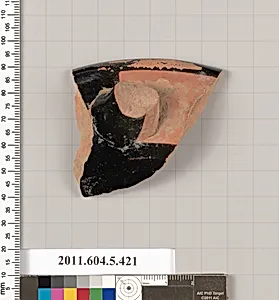
Terracotta rim fragment of a kylix (drinking cup)
Unknown Artist
5th century BCE
Medium
Terracotta
Classification
Vases
Culture & Period
Greek, Attic · Archaic/Classical
Department
Greek and Roman Art
Museum
Metropolitan Museum of Art, New York, NY
Credit
Gift of Dietrich von Bothmer, Distinguished Research Curator, Greek and Roman Art, 2011
Accession Number
2011.604.5.421
Rights
Public Domain
Art Historical Context
This delicate terracotta rim fragment from a kylix, a shallow, two-handled drinking cup offers a glimpse into the refined world of ancient Attic Greece during the 5th BCE. Popular at symposia—lively social gatherings where elite men reclined, drank wine mixed with water, and engaged in philosophical discourse—the kylix was both functional and artistic. Produced in Athens, the heart of Classical Greek pottery, such vessels were everyday luxuries, often adorned with intricate scenes from mythology, daily life, or athletics in black-figure or emerging red-figure techniques. Crafted from fired clay, this fragment exemplifies Attic vase-making mastery, where potters and painters collaborated in bustling workshops. Though only a rim survives, it hints at the vessel's graceful form, designed for easy handling while reclining. The Archaic-to-Classical transition marked a peak in naturalism and storytelling on pottery, influencing broader Greek art. Generously gifted to the Metropolitan Museum of Art in 2011 by Dietrich von Bothmer, this piece joins thousands of Attic fragments, helping scholars reconstruct lost masterpieces and daily rituals of a vibrant civilization. Pause here to imagine the laughter and libations it once held!