
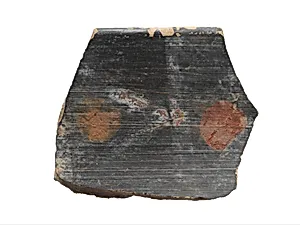
Terracotta rim of a cup with polychrome motifs
Unknown Artist
ca. 1800–1700 BCE
Medium
Terracotta
Dimensions
Overall: 1 1/4 x 1 3/8in. (3.2 x 3.5cm)
Classification
Vases
Culture & Period
Minoan · Middle Minoan II
Department
Greek and Roman Art
Museum
Metropolitan Museum of Art, New York, NY
Credit
The Cesnola Collection, by exchange, 1911
Accession Number
11.186.41
Rights
Public Domain
Art Historical Context
This delicate terracotta rim from a cup, dating to around 1800–1700 BCE, offers a glimpse into the vibrant of Minoan Crete during the Middle Minoan II period. Crafted by an unknown artist, this fragment—measuring just 1¼ x 1⅜ inches—survives from what was likely a small drinking vessel used in daily life or rituals. The Minoans, an advanced Bronze Age civilization centered on Crete, were renowned for their sophisticated palaces like Knossos and their mastery of pottery, which facilitated trade across the Mediterranean. The piece stands out for its polychrome, where multiple colors were to the fired terracotta surface, a technique that highlights Minoan innovation in ceramics. During MM II, potters refined wheel-thrown forms and bold decorative styles, often featuring abstract patterns, marine life, or floral elements that evoked the island's seafaring culture. Though only the rim remains, its intricate painting underscores the aesthetic refinement of Minoan artisans, who prioritized lively, naturalistic designs over rigid symmetry. Housed in the Metropolitan Museum of Art's Greek and Roman Art department as part of the Cesnola Collection (acquired by exchange in 1911), this tiny artifact reveals how everyday objects embodied cultural prestige. It invites us to imagine bustling Minoan feasts, where such cups held wine or rituals honored deities of the sea.