
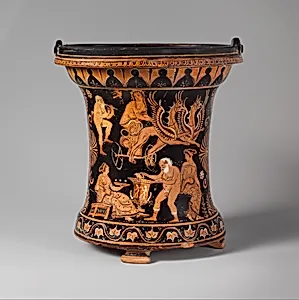
Terracotta situla (bucket)
ca. 360–340 BCE
Medium
Terracotta
Dimensions
H. 10 11/16 in. (27.1 cm)
Classification
Vases
Culture & Period
Greek, South Italian, Apulian · Late Classical
Department
Greek and Roman Art
Museum
Metropolitan Museum of Art, New York, NY
Credit
Fletcher Fund, 1956
Accession Number
56.171.64
Rights
Public Domain
Tags
Art Historical Context
This exquisite terracotta situla, bucket, crafted by the Lycurgus around 360–340 BCE, hails from the vibrant Apulian region of South Italy during the Late Classical period. just over 10 inches tall, it exemplifies Greek vase-painting traditions adapted by Greek colonists in Magna Graecia. Situlae like this were practical yet ceremonial objects, often used in rituals or as grave goods, blending everyday utility with mythological splendor. The vase bursts with dynamic red-figure decoration, a technique where figures are outlined in black slip on a red clay ground, leaving skin and details unpainted for natural vibrancy. Central to the scene is Dionysus, the god of wine and revelry, likely shown in a chariot drawn by mythical griffins—fierce eagle-lion hybrids symbolizing divine power. Flanking him are ecstatic maenads, his female followers, and playful satyrs, capturing the wild Dionysiac procession that embodied ecstasy, fertility, and the blurred line between mortal and divine. As a product of Apulian workshops, this situla highlights the cultural fusion of Greek myths with local Italic tastes, favoring elaborate, narrative friezes over simpler Attic styles. Acquired by The Metropolitan Museum of Art through the Fletcher Fund in 1956, it offers a window into ancient festivities and funerary beliefs, reminding us how art immortalized the joys of the gods.