
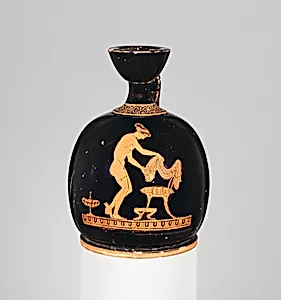
Terracotta squat lekythos (oil flask)
ca. 430 BCE
Medium
Terracotta
Dimensions
H. 3 9/16 in. (9 cm) diameter 2 13/16 in. (7.1 cm)
Classification
Vases
Culture & Period
Greek, Attic · Classical
Department
Greek and Roman Art
Museum
Metropolitan Museum of Art, New York, NY
Credit
Fletcher Fund, 1930
Accession Number
30.11.8
Rights
Public Domain
Tags
Art Historical Context
This petite terracotta squat lekythos, crafted around 430 BCE by the Washing Painter, exemplifies the refined artistry of Classical Attic Greece. Standing just 3 9/16 inches tall, this oil flask—used for perfumed oils in daily rituals or funerary offerings—features the red-figure technique, where black slip outlines figures against the natural red clay fired at high temperatures. The Washing Painter, active in Athens during the late 5th century BCE, earned his name from vivid scenes of women in intimate grooming moments, showcasing his mastery of graceful drapery and expressive poses. Adorned with motifs of women dressing amid chairs, the vase captures a glimpse of Athenian domestic life, likely evoking the quiet routines of elite households. These subtle, everyday scenes highlight the period's shift toward more naturalistic and narrative pottery, moving beyond mythic grandeur to personal vignettes. Housed in the Metropolitan Museum of Art's Greek and Roman Art Department (acquired via the Fletcher Fund in 1930), this vessel offers a tangible link to Classical Greece's cultural elegance, where beauty intertwined with utility in burial customs and beauty regimens. A charming survivor of antiquity, it invites us to ponder the lives of women 2,500 years ago.