
Terracotta squat lekythos (oil flask)
Unknown Artist
late 5th–early 4th century BCE
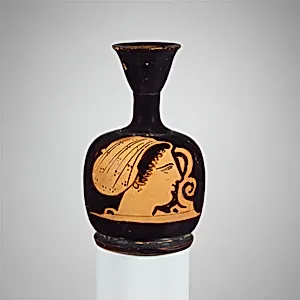
Medium
Terracotta
Dimensions
H. 3 3/4 in. (9.6 cm)
Classification
Vases
Culture & Period
Greek, Attic · Classical
Department
Greek and Roman Art
Museum
Metropolitan Museum of Art, New York, NY
Credit
Rogers Fund, 1941
Accession Number
41.162.135
Rights
Public Domain
Tags
Art Historical Context
This delicate terracotta squat lekythos, standing just 3 3/4 inches tall, hails from Attic Greece during the late Classical period (late 5th–early 4th century BCE Crafted as an oil flask, lekythoi like this were everyday vessels for perfumed oils and cosmetics, but their squat, bulbous form made them ideal for funerary use—often placed in tombs as offerings to honor the deceased. Produced in Athens, the heart of Greek pottery innovation, this piece reflects the refined craftsmanship of a culture at the peak of its artistic and philosophical golden age. The flask's surface likely features painted motifs of women's heads, a common theme in Attic vase-painting that evokes beauty, mourning, or domestic life. Terracotta, fired clay painted with mineral-based slips, allowed for vibrant reds, blacks, and whites that have endured millennia. Though the artist remains unknown, the work embodies the shift toward more intimate, narrative scenes in Classical Greek ceramics, moving from grand myths to personal vignettes. Acquired through the Rogers Fund in 1941 and housed in the Metropolitan Museum of Art's Greek and Roman Art Department, this tiny treasure offers a window into ancient rituals and aesthetics. Imagine an Athenian family gently anointing a loved one's grave with scented oil from such a flask— a poignant blend of utility, art, and eternity.